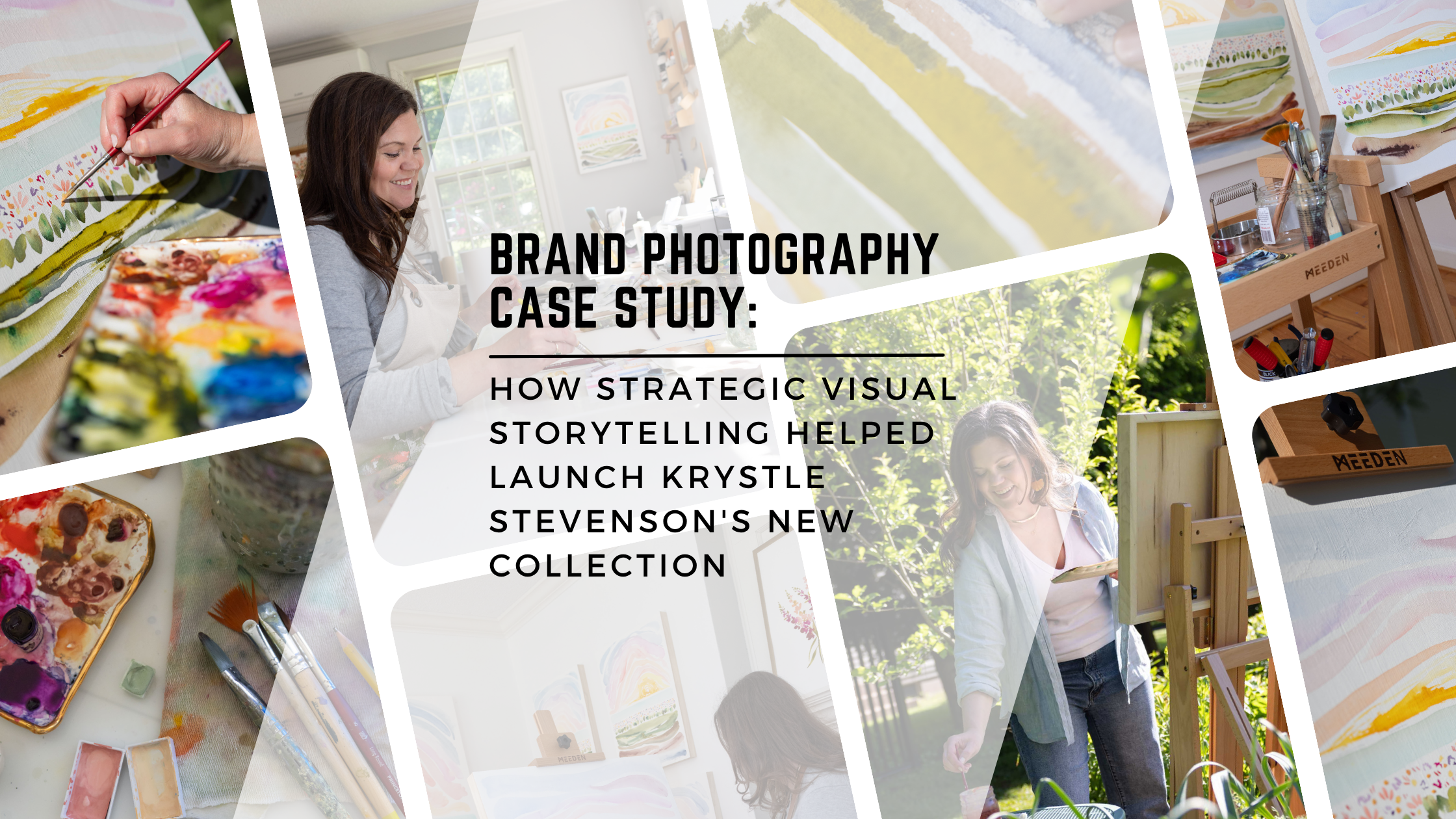
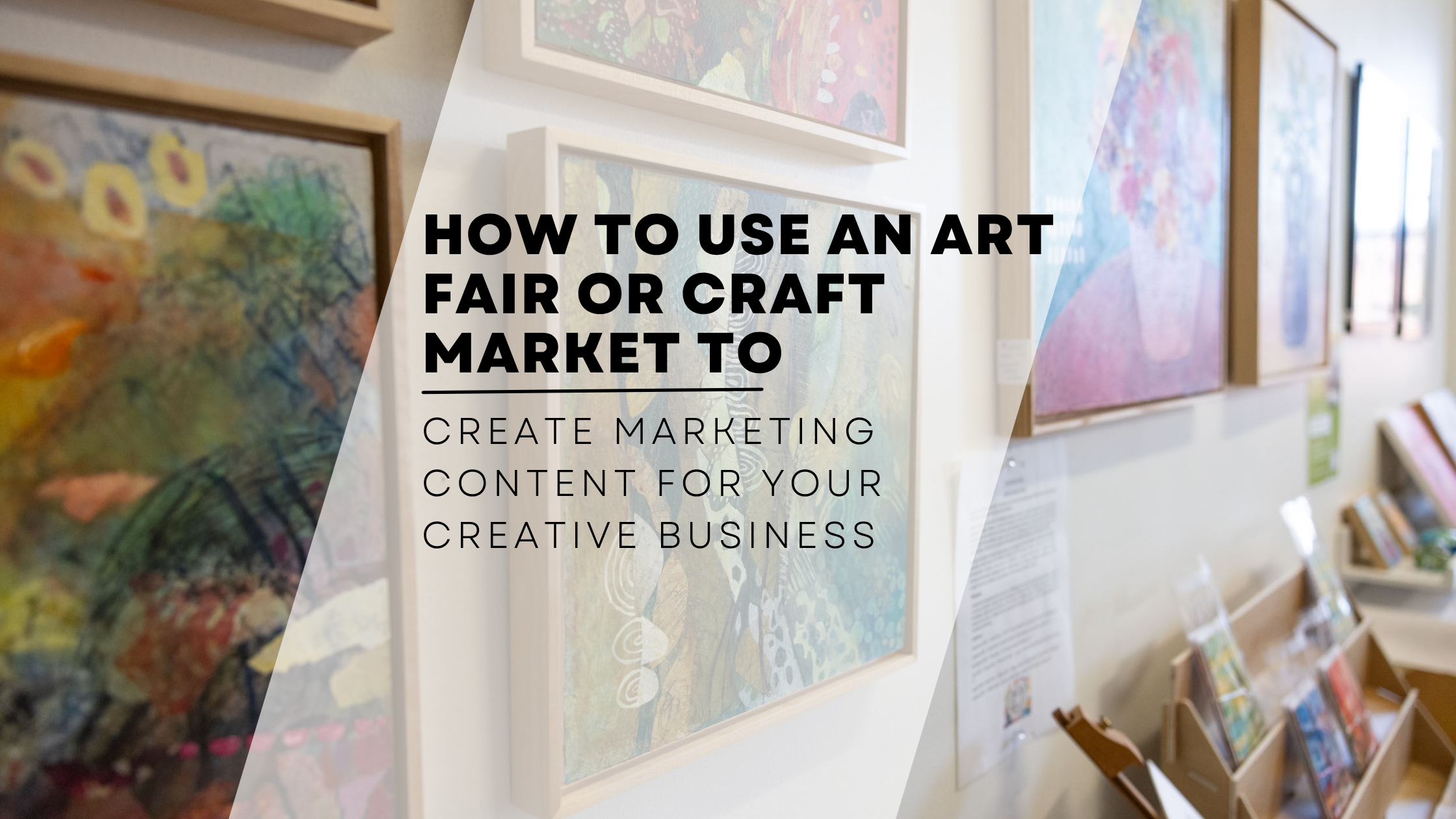
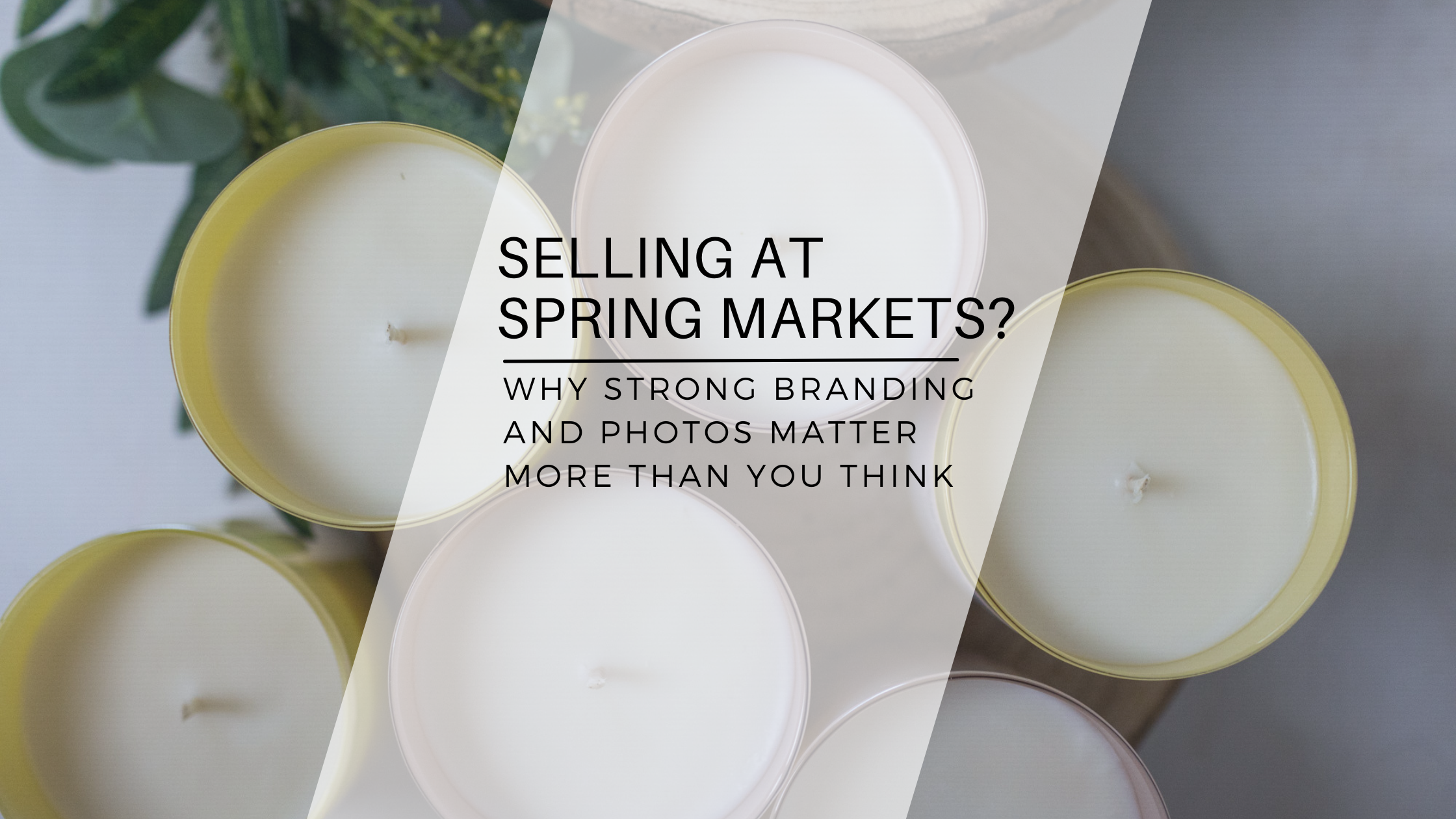
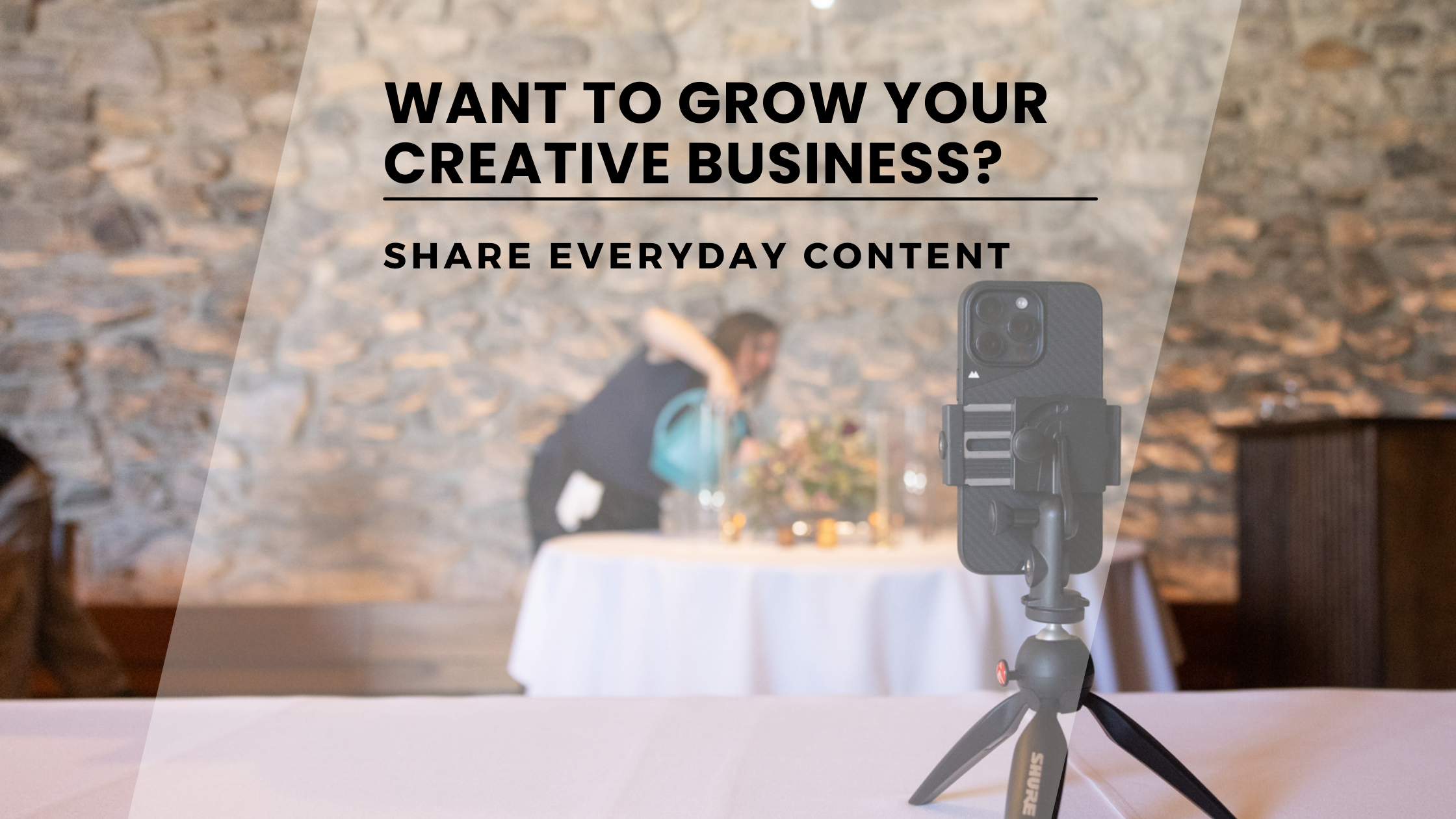
83.4K views, received 5,316 likes, 291 comments, 76 reposts, and 1,286 shares.… in 10 days
Those numbers came from one 90-second artist studio video I created with mixed-media artist Amy Genser. But here’s the thing: we didn’t set out to make a popular video.
We set out to answer four simple questions her audience already had: What is this art? How is it made? How did you get started? And what inspires you?
That’s exactly why I think this project is such a great example of the power of strategic visual storytelling. Sometimes the best-performing content isn’t the content you create because you think the algorithm will like it. It’s the content you create because your audience genuinely wants to know more.
For artists, makers, and designers, your creative process can be one of the most powerful stories you have to tell.
Start With the Questions Your Audience Is Already Asking
When I first looked at Amy’s Instagram, I could immediately see the beauty of her finished work. Her pieces are visually distinctive, but there was one important gap: it wasn’t immediately clear what the artwork was made from.
And that matters.
If someone discovered Amy for the first time, they could appreciate the finished pieces without ever understanding the incredible process behind them. They might admire the colors and composition, but they wouldn’t necessarily know that paper was such an integral part of the work—or understand how much thought and physical labor went into creating those finished pieces.
Rather than simply creating more photographs of the artwork, I saw an opportunity to create something that would help people understand it.
That became the idea behind Amy’s “Welcome to My Studio” video.

Watch Amy’s “Welcome to My Studio” video
This is the finished 90-second video that inspired this post.
The goal wasn’t to tell Amy’s entire story. It was to give someone who had just discovered her work enough context to think:
Oh. Now I understand.
And that distinction is important.
You don’t have to tell people everything about your creative business in every piece of content. You need to identify the one story that will help your audience understand why they should care.
Your Process Is Often More Interesting Than You Think
As a creative business owner, you live with your process every day. You know how you prepare your materials. You know which tools you reach for. You know the little adjustments you make without thinking. You know the mistakes you’ve learned to avoid and the techniques you’ve developed through years of practice. Because you know all of this so well, it can be easy to assume that none of it is particularly interesting. But your audience doesn’t have that context.
The thing you’ve done a thousand times might be the exact thing that makes someone stop scrolling.
That’s why I often tell makers, artists, and designers to look beyond the finished piece when thinking about artist marketing.
The finished piece tells us what you made. Your process starts to tell us why it matters.
It shows your skill, your decisions, your experience, your personality, and the amount of thought that goes into something that might otherwise look effortless when it’s finished.
The video gives you an incredible opportunity to show that transformation.

Four Questions Became the Story
For Amy, we had four questions guiding the video: What is the art? How is it made? How did she get started? And what inspires her?
Those questions gave us a simple framework for the entire shoot.
We weren’t trying to create a generic studio tour. We were creating an introduction to Amy’s creative world that would give a new audience member enough information to understand the person and process behind the work.
What is the art?
This was one of the biggest gaps I wanted to address. Amy’s finished work is visually compelling, but the materials aren’t necessarily obvious from the final pieces alone.
So we needed to bring the paper into the story.
How is it made?
This is where video really earns its place.
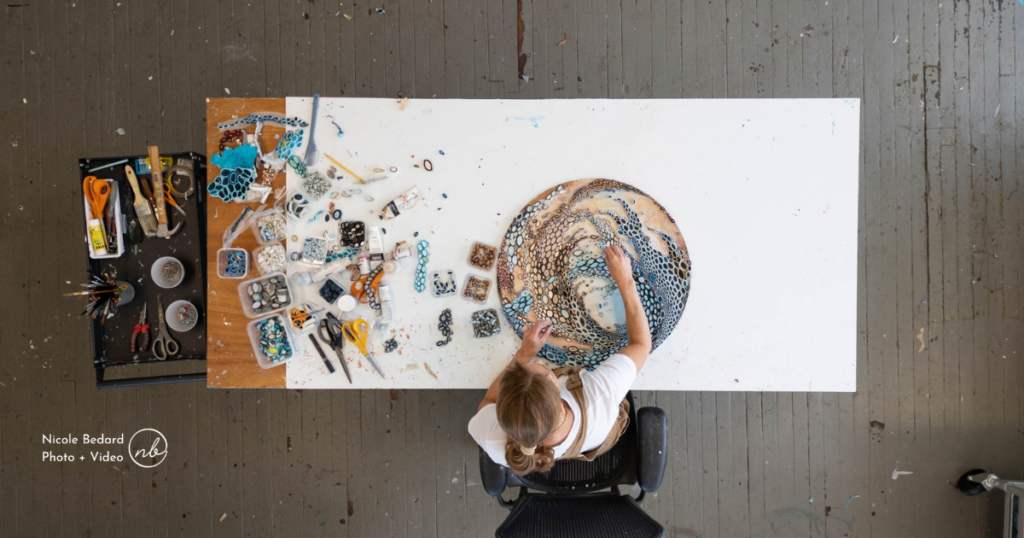
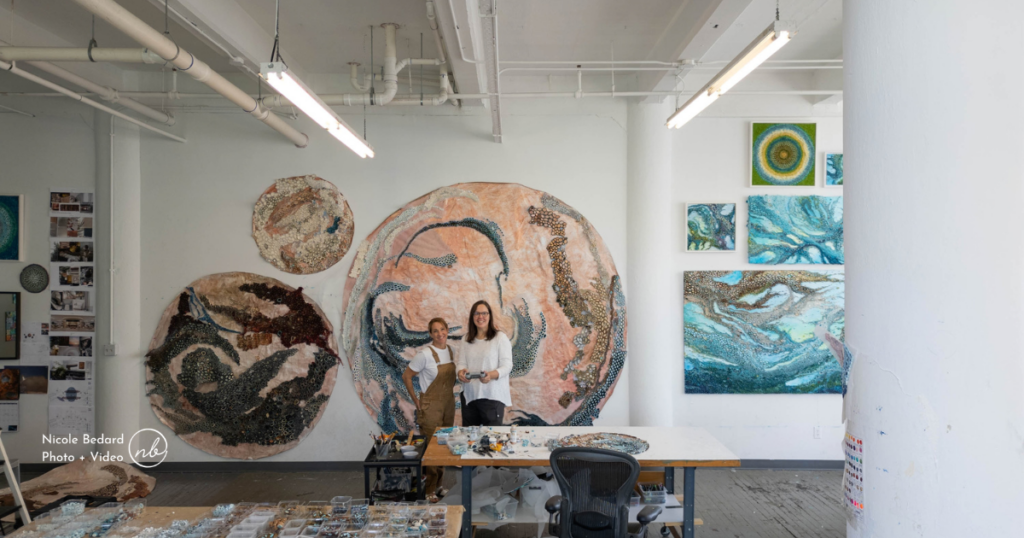
Rather than asking Amy to explain every step, we could show her rolling paper, cutting paper, painting backgrounds, working with her paper modules, and arranging those pieces into larger compositions.
How did she get started?
Amy has been an artist for more than 20 years, so her experience and history gave the audience context for the work they were seeing.
What inspires her?
Ultimately, people don’t just want to know what an artist makes. They want to understand why. Those four questions became the backbone of a story that we could tell in just over 90 seconds. That’s the power of having a strategy before you pick up the camera.
You Don’t Have to Be “Good on Camera”
One of the biggest objections I hear from artists is that they don’t want to be on camera. I understand that and empathize. They are not alone because almost all the people I work with feel the same way.
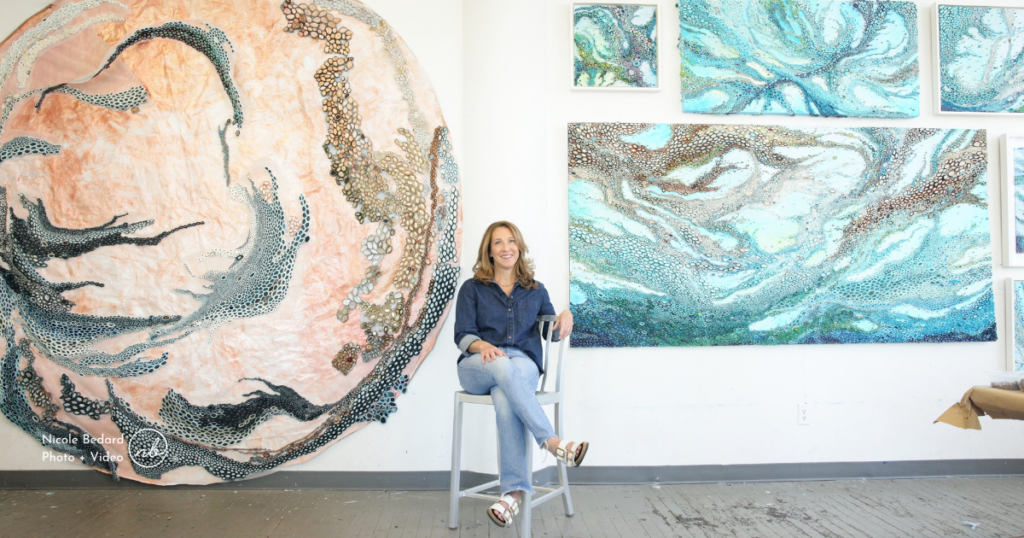
Amy’s video did begin with a to-camera interview, but that interview was only one small piece of the finished story.
Amy has been an artist for more than 20 years, so she already knew what she wanted to say. There was no need for a script or teleprompter. We talked through the questions, captured her answers, and used that interview as the foundation for the rest of the video.
Then we got out of the chair.
That’s where the story really came alive.
Instead of watching Amy explain her process for 90 seconds, we could hear her talking while watching her hands work, seeing her materials, moving through her studio, and watching her pieces come together.
The interview gave us the voice. The process gave us the visuals.
That’s an approach I love for artists who aren’t naturally comfortable in front of a camera.
Show the Parts Your Audience Can’t See in a Finished Photograph

After the interview, we moved into Amy’s process.
We captured her rolling paper, cutting paper, painting a background, working with her paper modules, and placing those pieces to create a larger design. We also captured her finished pieces on the wall, giving the video a natural sense of beginning, middle, and end.
But I wasn’t simply collecting pretty B-roll.
Every shot had a job.
If Amy was talking about her materials, we showed the materials. If she was describing her process, we showed her hands working. If she was talking about the larger compositions she creates, we showed her physically building them.
That’s an important distinction when you’re thinking about video for artists.
Good B-roll isn’t just footage that looks nice.
It’s footage that helps your audience understand what you’re saying. That’s visual storytelling.
Check out the visuals and videos here!
Sometimes the Best Perspective Isn’t Eye Level
Once we’d captured the interview and process footage, I brought out the drone.
This gave us an entirely different way to show Amy’s studio and process.
We captured Amy painting a large background, showed all of her paper modules spread across her work tables, and filmed her placing individual pieces to create a larger design.
That overhead perspective helped communicate something that traditional camera angles couldn’t quite capture: the scale and physicality of her process.
You could see the materials surrounding her. You could see the relationship between the individual pieces and the larger composition. You could see Amy physically moving through the process of building the work.
For an artist, those details matter.
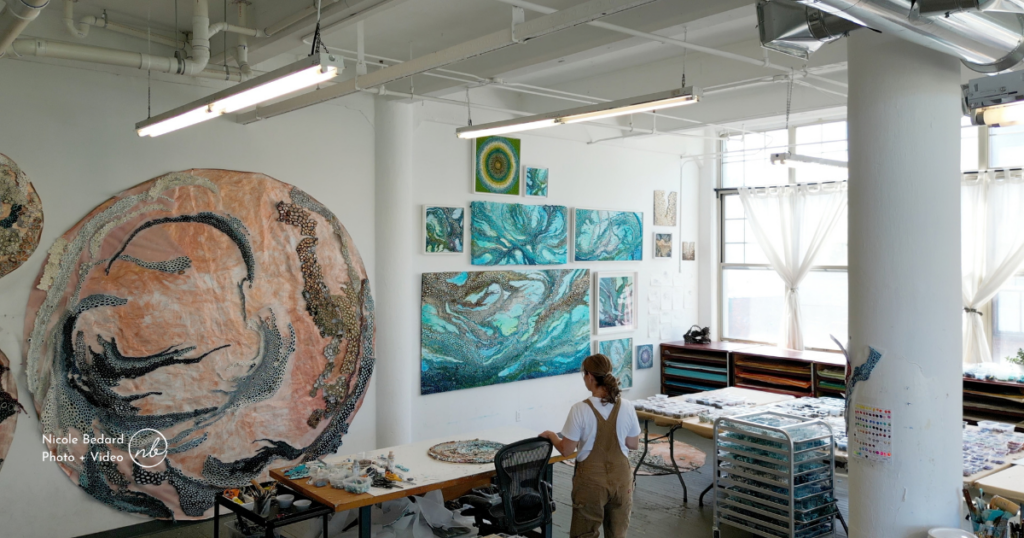
Your studio has a story.
The scale of your workspace has a story.
The materials you keep within reach have a story.
And sometimes changing the perspective is all it takes to help your audience see something they’ve never noticed before.
Check out all the drone work here!
We Captured the Whole Story in Two Hours
The entire session was approximately two hours. We started with the interview portion, moved into the process footage, and then captured the drone footage. The reason we could do that efficiently was because we had a clear idea of what the video needed to accomplish before we started shooting.
We weren’t simply walking into Amy’s studio and asking, “So, what should we film?”
Amy knew the questions she wanted to answer and how she was going to answer them. With only a few takes we could move to the next phase of the project. I’m always mindful of ones creative energy as well. A full day production is not what a creative business owner wants or needs. They need to return to their creative work and draining them of their energy isn’t going to help them.
We knew we wanted a mix of perspectives, from the intimate details of Amy’s hands working to the larger overhead view of her studio. I outline the flow of the session before I even picked up the camera.
Strategy makes a shoot more efficient. It also makes the resulting content more useful.
The Result Was Bigger Than the View Count
In the first 10 days, Amy’s video reached 83.4K views, received 5,316 likes, 291 comments, 76 reposts, and 1,286 shares.
Her Instagram following grew by approximately 1,800 people.
Those are impressive numbers, but the number I keep coming back to is the 1,253 shares, because a share is a different kind of engagement. Someone didn’t just watch the video. They decided that someone else should see it.
Every few hours I jumped back onto Instagram just to read the latest comments. They were just so kind and supportive.
“What a fascinating look into your process.”
“This is a great glimpse into your studio and creative process!”
One person who identified herself as a teaching artist shared something that really stood out to me:
“I adore both your stunning images and the calm, clear way you explain your process. As a teaching-artist, it means so much to me that everyone and anyone can easily understand how you actually create these astonishing pieces.”
That is exactly what we were trying to accomplish. We weren’t just showing beautiful artwork. We were making the process visible and understandable and then there were the comments from people who were discovering Amy’s work for the first time.

“I’ve never seen this style of artwork before and it’s very beautiful!!”
And this one might be my favorite:
“Really incredible! One of the best Instagram videos I’ve seen.”
The response wasn’t simply, “Beautiful work.”
It was curiosity, understanding, discovery, and connection.
That’s why I keep coming back to the 1,253 shares. That is a powerful outcome for an artist trying to reach a new audience.
It also reinforces something I believe strongly about social media: the goal isn’t simply to get more views. The goal is to create something that makes the right person curious enough to stop, understand, connect, share, follow, or eventually buy.
Reach gets attention. Connection gives people a reason to stay.
And when your content helps someone understand something they didn’t understand before, you’ve created something much more valuable than another post in the feed.
What This Means for Your Artist Marketing
If you’re an artist, maker, or designer, I don’t want you to read this and think, I need an 83K-view video.
That’s not the takeaway.
Instead, start with a more useful question:
What does my audience not understand yet?
They may see the finished work without knowing what it’s made from, how much time and skill goes into creating it, or what makes your approach different. They may know your work but not the story behind it—or have never had the opportunity to see the person and process behind what you create.
Those gaps are where your stories live.
Pay attention to the questions people ask, the parts of your process you take for granted, and the things you find yourself explaining again and again. That’s where you can uncover content that actually helps your audience understand and appreciate your work.
You don’t need to create something complicated. Start with the story, then choose the format that best tells it. A studio video, process footage, a short interview, or a series of images can all give your audience a deeper look at the work behind the finished piece.
For Amy, bringing those elements together in a Welcome to My Studio video gave people a reason to stop, learn something new, and see her work differently.
Your Studio Is Already a Marketing Asset
This is one of the reasons I love working with artists in their creative spaces. Your studio isn’t just where you happen to work.
It’s part of your brand.
The tools on your table, the materials stacked in the corner, the artwork in progress, the sketches on the wall, the mess you haven’t gotten around to cleaning up, and the way you physically move through the space all tell us something about you.
Your audience doesn’t necessarily need a polished, perfect studio. In fact, the opposite may be more interesting.
They want to see the real place where the work happens. They want to see the human behind the handmade.
They are curious about what goes into making your art and by the time it reaches your website or Instagram feed, that a finished piece can not communicate such layers of stories.
This is why I believe your studio and your process can become some of your most valuable marketing assets.
So, What Would Your “Welcome to My Studio” Video Look Like?
Take a look around your studio and imagine someone walking in who has never seen your work before.
What would they ask?
What would surprise them?
What would they want to touch?
What part of your process would make them stop and watch?
What do you do every day that you’ve stopped noticing because you’ve been doing it for years?
And what would you want them to understand about your work before they ever consider buying from you?
Those questions are a much better starting point for an artist studio video than simply asking, “What should I post this week?”
Because when you start with the story, the content becomes much easier to find.
Your Process Deserves to Be Seen
You didn’t spend years developing your craft just to show people the finished piece and hope they understand everything that went into it.
There is a story in the making, in the materials, the studio, in the person behind the work and there is a story in the process that transforms an idea into something tangible.
My job is to help you find those stories and turn them into strategic photography and video that helps the right people understand, connect with, and value what you do.
If you’re ready to invite people into your creative world, let’s talk about creating your studio story
Want to learn how to tell better visual stories yourself?
You don’t have to hire a professional every time you want to show up online.
If you’re a maker, artist, or designer who wants to become more confident using your own visual content, Be Seen On Purpose will help you approach social media with more strategy and less pressure.
You’ll learn how to use visual storytelling to build trust, attract the right customers, and confidently market your creative business—without feeling like you have to become a content creator.
[Explore Be Seen On Purpose →]