If you’re an artist, maker, or creative business owner, you probably spend weeks, more like months, preparing for an art fair or craft market. You carefully package products, design your booth, create signage, and hope for a successful weekend of sales.
As a brand photographer who specializes in helping creative business owners tell the story behind their work, I see one missed opportunity at almost every market:
Most artists focus on selling for the weekend, but they forget to capture the photos and videos that could market their business for the rest of the year. Insert eye roll. I know, I know. You are exhausted after packing up, driving to your location, then having to build out your booth, but all of it is brimming with opportunity.
That’s why I’ve created this roadmap.
Whether you’re attending your first craft market or your fiftieth, this guide will help you capture intentional marketing content you can use on your website, social media, email newsletters, future event applications, and promotional materials, long after you’ve packed up your booth.
Your art fair isn’t just a place to sell your work.
It’s one of the best opportunities you’ll have all year to create authentic marketing content for your creative business.
Don’t document your art fair or craft market like an attendee.
Document it like you’re already marketing next year’s event.
Why Art Fairs & Craft Markets Are a Goldmine for Marketing Content
Many creatives pack up after a successful weekend feeling exhausted, but they miss documenting what they accomplished.
The goal isn’t just to sell products.
The goal is to leave with visual assets that help you market your business for the next six months.
Every market gives you opportunities to create content for your website, print marketing materials, social media and email marketing. But here is a bonus that many overlook. During the actual fair or market you can be posting some of the images for 3-5 second video clips to your social media to share information about the show for people who plan to attend and for those who won’t be able to attend but are on the creative journey with you.
Even though you might post throughout the day, you can then reuse the same content for an Day 1 Recap Reel for example. Never fear of reusing content or being redundant, most might not catch it the first time, so it’s always a good reminder the second time, or more.
Watch: Turn Any Market Pop UP or Expo Into Marketing Gold: 3 Content Ideas You Need
If you’re more of a visual learner, watch this walkthrough where I share practical ideas for documenting your next art fair or craft market. Then scroll down for the complete content roadmap, posting timeline, and checklist.
A 2-Day Art Fair or Market Content Roadmap for Creative Business Owners
As a brand photographer, I encourage my clients to think about an art fair as more than a sales event, it’s a two-day content creation opportunity. This is an event with so much visual storytelling potential. Here’s a simple roadmap to help you capture intentional photos and videos while still focusing on your customers. To make all of this easier, if a friend or family member is with you during this event, pass this list off to them, so their job is to capture the content needed. This is marketing gold for you now and in the future.
Day 1: Build Excitement & Document the Experience
Before the Event Opens
Content ideas to capture.
These can be photos or short video clips (3-5 seconds) Bonus if you talk to camera and explain what is going on. You know everyone loves a good story.
- Packing inventory into your vehicle
- Loading your display materials
- Driving to the venue
- Unloading your booth
- Booth setup time-lapse
- Empty booth before setup
- Finished booth reveal
- Product detail photos
- Portrait of yourself in your booth (Ask a neighboring vendor to take one for you, and offer to return the favor.)
When to Post
Share these as soon as your booth is set up.
Where to Post
Instagram Stories
Why It Matters
People attending the event may still be deciding which booths to visit. Posting early lets them know:
- Where to find you
- What products you’re bringing
- What your booth looks like
- That you’re excited to meet them
What to Post
- A time-lapse of setting up
- Before-and-after booth transformation
- A selfie or portrait in your booth
- Close-ups of featured products
- A quick “We’re ready!” video

During the Selling Hours
Now switch from documenting your booth to documenting the customer experience. This can be tough to do on your own. I would recommend having your phone on a small tripod to capture time lapse videos or a small action camera setup on a tripod to capture different interactions. Some that are favored now are insta 360 cameras, dji action cameras and even using Meta glasses for a POV perspective.
Content Ideas to Capture
- Booth-wide shots showing activity
- Short clips of your products being handled
- Small details around your display
When to Post
Post to IG stories as soon as you have a slow time during the day or after the event ends that day.
Where to Post
Instagram Stories
Also consider capture these talking videos
Record a 30-60 second clip sharing:
- Your biggest seller today
- A fun customer interaction
- What surprised you
- A product people are loving
- How the event has been going
Don’t worry about perfection—people love hearing directly from the maker.
Share a Win
Examples:
- “I’ve already sold out of my ceramic mugs!”
- “This new collection has been getting so much attention today.”
- “I’ve met so many wonderful people already.”
These updates create excitement without feeling overly promotional.
If you can post one of these talk videos or even a recap day 1 reel by the end of the day, that would be ideal. You want to bring people along for the journey can get them excited for day 2 if they plan to attend.

Day 2: Build Trust & Create Evergreen Marketing Content
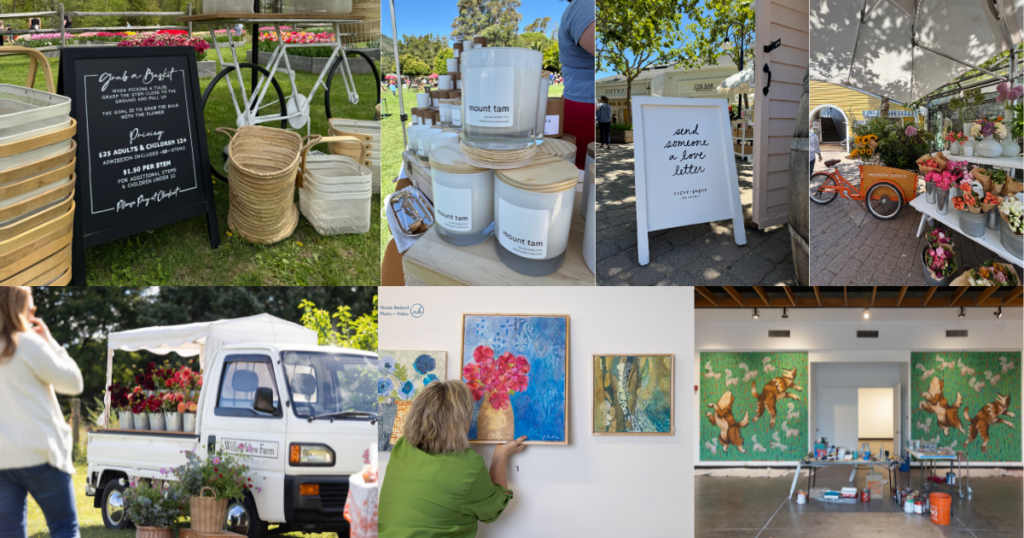
By Day 2, you’ve settled in. Instead of only focusing on sales, spend a few minutes capturing content you’ll use for months.
Capture these pieces of content
- A clean wide shot of your booth
- Product collections
- Lifestyle portraits of yourself
- Hands interacting with products
- Your branding and signage
- Close-up detail images
- A few horizontal photos for your website
Continue with the same workflow as day 1. Capture a few photos or 3-5 second video clips and post as soon as you can before day 2 doors open. Then you know you have something posted for those looking for your booth or on the journey with you online. By the end of the day you should have more photos and videos like on day 1 so you are ready to create a Day 2 Recap post at the end of the day. The end of day 2 will be exhausting since you will now have to breakdown your booth display, pack up and drive home. If you can take a 10 minutes to put together 5-8 clips today for a Reel and post with a caption calling out highlights, wins, or top sellers that would great. Don’t forget to mention the art fair or market in the post and tag them. They will most likely reshare the content which means more eyes on you.
Bonus action. I seen many artists and makers sell items via their instagram stories once the event is over. Your online audience has been along for the ride seeing new products or collection pieces for the event. Now it’s their chance to purchase items that still remain. Another reason to keep the posting and visual storytelling going.

Share a Gratitude Post either the next day or a few days after the event.
Not every post needs to sell something.
One of the most meaningful pieces of content you can share is a simple thank-you.
Express your appreciation for:
- Everyone who stopped by your booth
- Customers who made a purchase
- Returning collectors and supporters
- Friends and family who helped
- Fellow vendors who made the weekend enjoyable
- The event organizers who brought the community together
Gratitude posts strengthen relationships, encourage engagement, and remind your audience that there’s a real person behind the brand. Sometimes the strongest marketing isn’t about promoting your products, it’s about celebrating the community that supports your work.
Organize Your Content Before You Go To The Art Fair or Market
If you plan on using your phone, create an album on your phone and name it the fair or market name. Then once you have a slower moment during the show or at the end of the day you can review the content and put your favorite photos and clips into that folder. By the end of the 2 days you will have an album filled with winning photos and videos which will speed up your content creation at the end of each day.
These assets will become a valuable content library you can pull from for weeks—or even months—to create social media posts, blog articles, email newsletters, future event applications, and promotional materials.
Remember: A successful art fair doesn’t just result in sales. It leaves you with a collection of authentic photos and videos that continue telling your brand story long after the booth comes down.

One Last Tip…
If you’ve never used the Time-Lapse feature on your phone, you’re not alone. Many creative business owners don’t realize there’s already a powerful storytelling tool built right into the camera they carry every day.
A simple time-lapse of setting up your booth, arranging products, or watching customers browse can instantly make your content more engaging, and it takes almost no extra effort while you’re already working.
The same goes for capturing short video clips, behind-the-scenes moments, and the little details that help customers connect with your brand.
If you’d like to learn how to confidently use your phone to create intentional marketing content, my Capture Content That Connects course was designed specifically for makers, artists, and creative business owners.
Inside, I’ll show you how to use the camera that’s already in your pocket to capture authentic photos and videos that tell your story, build trust, and give you a steady stream of content for social media, your website, and beyond, without feeling like you have to become a photographer.
If you’ve ever thought, “I know I should be documenting more, but I don’t know what to capture or how to use it,” this course is for you.
Ready to start creating content with confidence? Explore Capture Content That Connects and learn how to turn everyday moments into purposeful marketing for your creative business.